
Choose the wrong die casting grade, and you are looking at real problems. Cracked parts, a failed anodizing run, and an entire batch scrapped. This guide covers the key aluminum die casting material grades, their advantages and weak points, and how to select the right alloy for your project.
Overview of Die Casting Aluminum Alloys
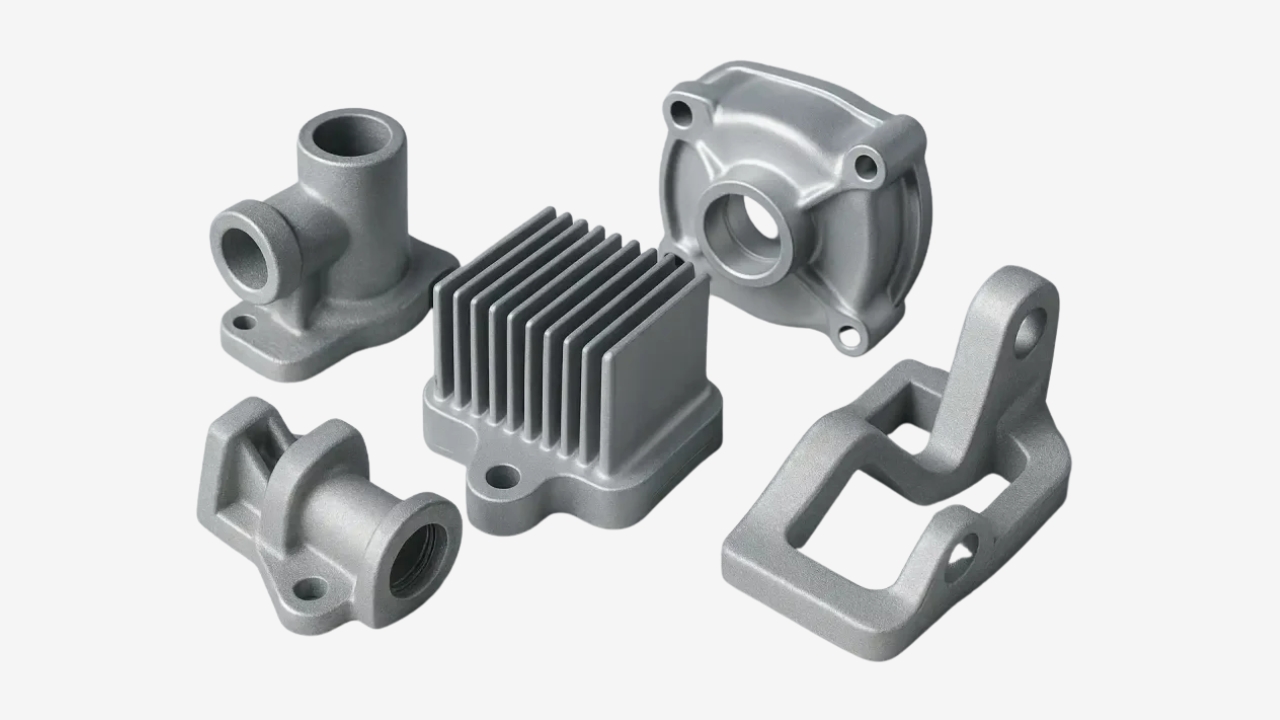
Die-casting aluminum alloys are not pure aluminum. They are alloyed with silicon, copper, magnesium, and other elements. Silicon helps the molten aluminum flow smoothly, so it reaches every corner of the complex molds cleanly.
Change the element ratio in die-casting aluminum alloys, and you get parts that behave completely differently. The grade is the alloy designation.
Major Standards for Die Casting Aluminum Alloys
| Standards | Regions | Representative grades | Industry focus |
| ASTM / SAE | United States | A380, A360, A383, A413 | General machinery, automotive (global standard) |
| JIS | Japan | ADC12, ADC10, ADC6 | Electronics, automotive (Asia supply chain) |
| EN 1706 / DIN | Europe | EN AC-46000, EN AC-46100, AlSi9Cu3 | Automotive, precision engineering (strict QC) |
| GB/T 15115 | China | YL102, YL113 | Cost-effective industrial components |
Alloy Grade Cross Reference
| ASTM | JIS | EN | GB | Notes |
| A380 | ADC10 | EN AC-46000 (AlSi9Cu3) | YL112 | Higher copper content than ADC12 |
| A360 | ADC3 | EN AC-43400 (AlSi10Mg) | YL104 | High corrosion resistance, superior ductility |
| A413 | ADC1 | EN AC-44300 (AlSi12) | YL102 | High silicon content, excellent pressure tightness |
| A383 | ADC12 | EN AC-46100 | YL113 | Most common |
The grade correspondence in the table is based on the chemical composition of the aluminum alloy. Similar chemical compositions don’t guarantee the same mechanical properties. Before replacing the key parts, you must conduct actual tests. Don’t just rely on the tables.
Key Die Casting Alloy Grades
A380
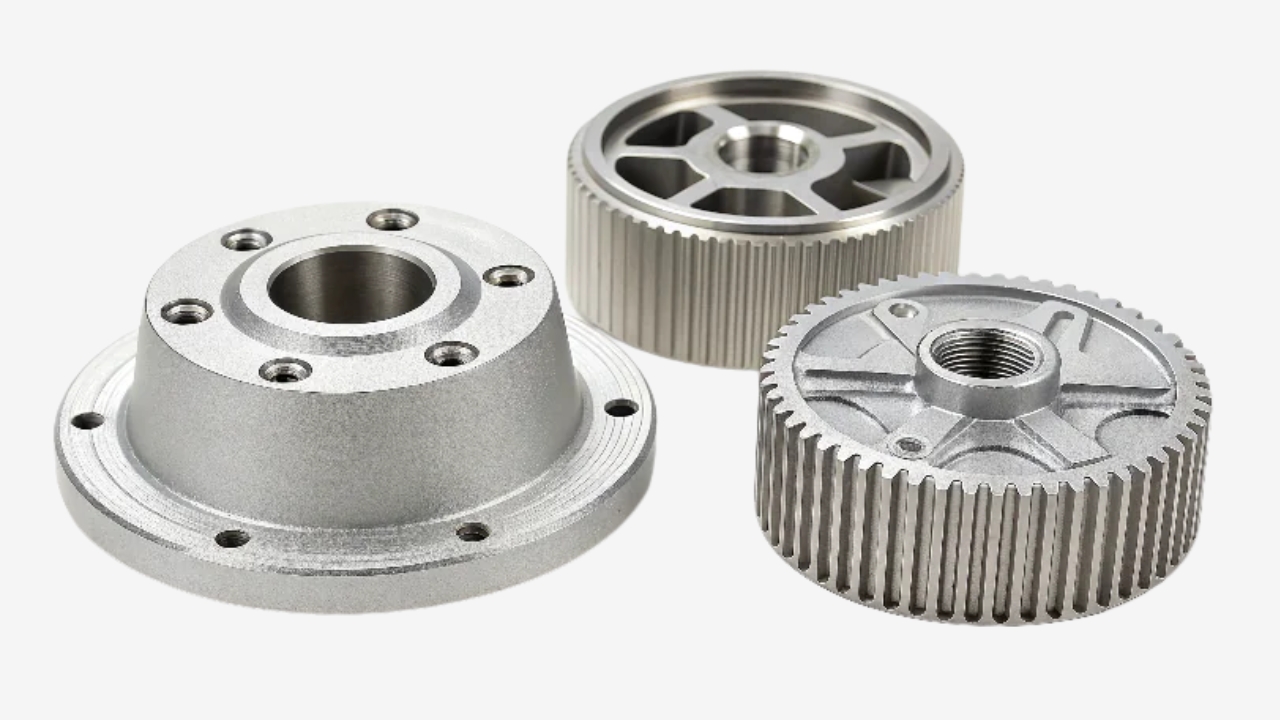
A380 is the most widely used general-purpose die-casting aluminum alloy in the North American market. It contains copper. At around 320 MPa tensile strength, it hits noticeably harder than pure aluminum-silicon alloys. It doesn’t excel in any single area, but it doesn’t fall short in any either.
If you need parts such as automotive engine brackets, electronic device housings, and general structural components that require high strength, but you don’t want to spend too much money on materials, A380 is a good choice.
Yes, A380 corrodes faster than A360 and flows worse than ADC12. But it costs less than both, and sourcing it is never a problem. But you should never use it on products that require anodizing, because the casting’s surface will turn black, gray, and spotty.
ADC12
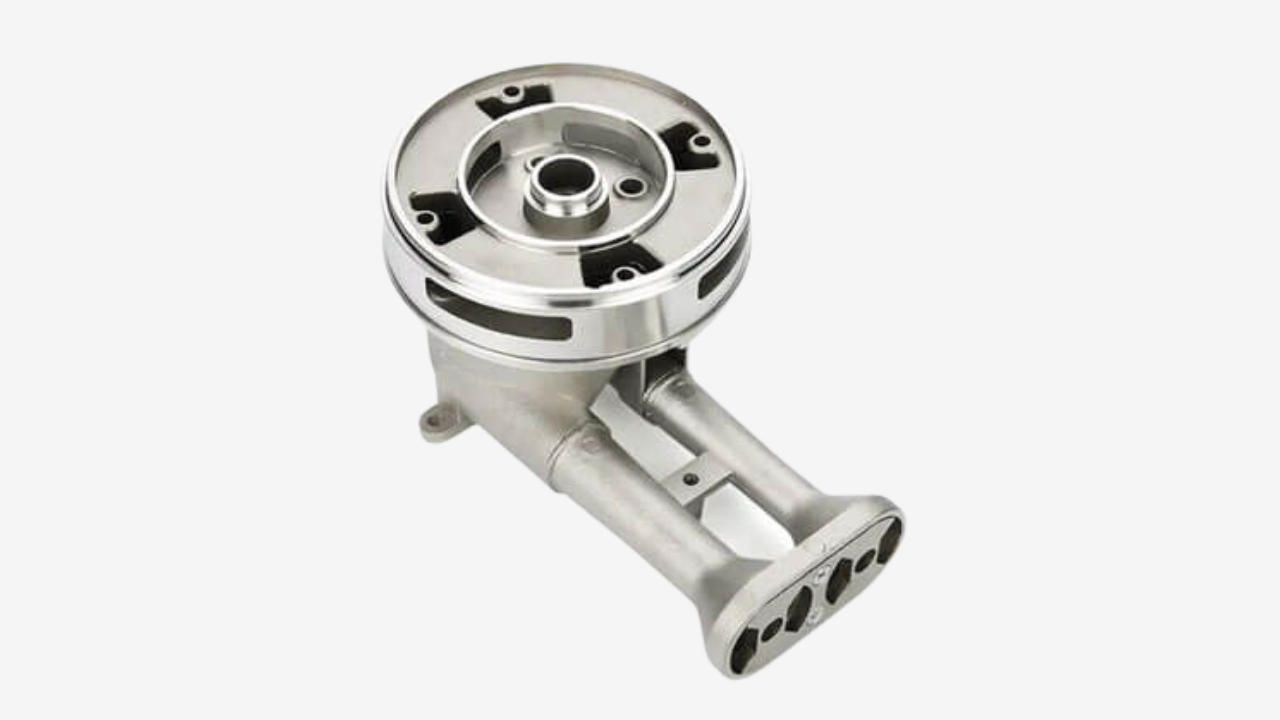
ADC12 is the most familiar grade among the factories in China, Japan, and Southeast Asia. In Chinese factories, ADC12 raw materials are the most abundant, and their cost may be even lower than that of the A380.
The silicon content of ADC12 is about 11%. That gives the molten aluminum excellent fluidity—thin walls, tight fins, complex mold cavities, none of these are a problem.
LED heat sink housings, smartphone mid-frames, laptop casings, and electronic components—all of these are parts with thin walls or numerous small heat dissipation fins. ADC12 is more suitable than A380.
ADC12 has a low copper content. Its tensile strength is around 220-280 MPa, which is about one class below the A380. It is not suitable for anodizing and cannot undergo T6 heat treatment.
A383
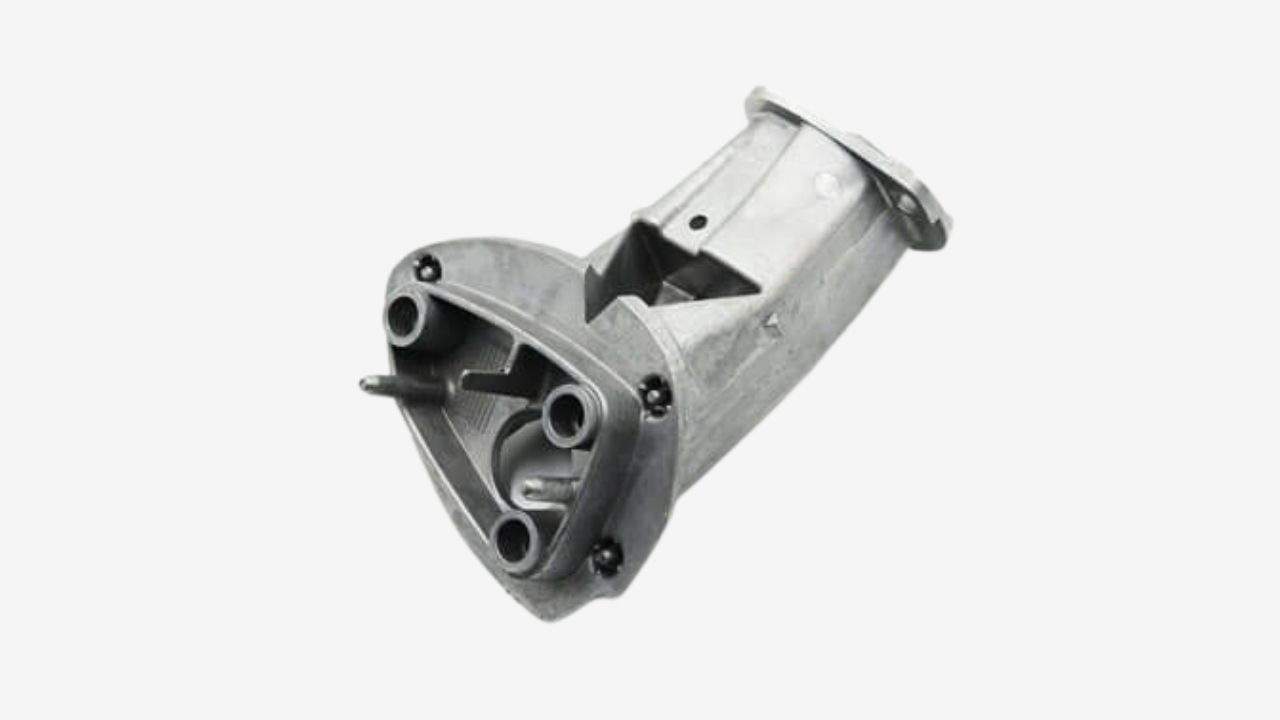
For parts like precision telecom components, they have extremely complex designs and very thin walls. When die-casting using A380, thermal cracking or defects often occur.
A383 is an improved version of A380. It runs higher on silicon and copper than A380, and its complex shape is less prone to cracking within the mold cavity; the tooling holds up longer as a result. But it is about as strong as the A380, and the price might be a little higher.
A360
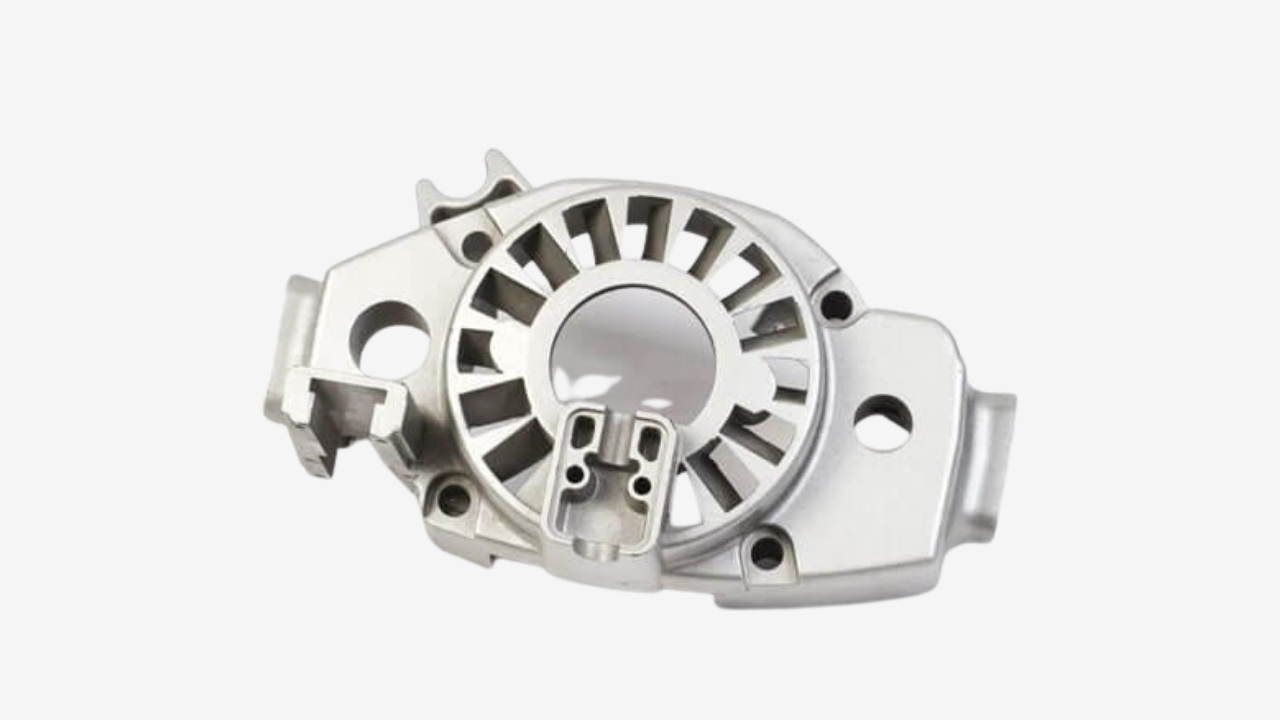
A360 is the die-cast aluminum grade you reach for when humidity and heat are a real concern.
Its iron and copper content is extremely low. Higher magnesium content is what gives it that edge against salt spray and humid heat. A360 has good ductility and doesn’t break easily. It also anodizes well—the finish comes out clean and even.
If you need medical device housings, marine components, or valve bodies, A360 is the safer option. But it has a narrower casting window than the A380, a higher melting point, and poorer casting fluidity. So the factory will charge a higher unit price for this grade.
A413
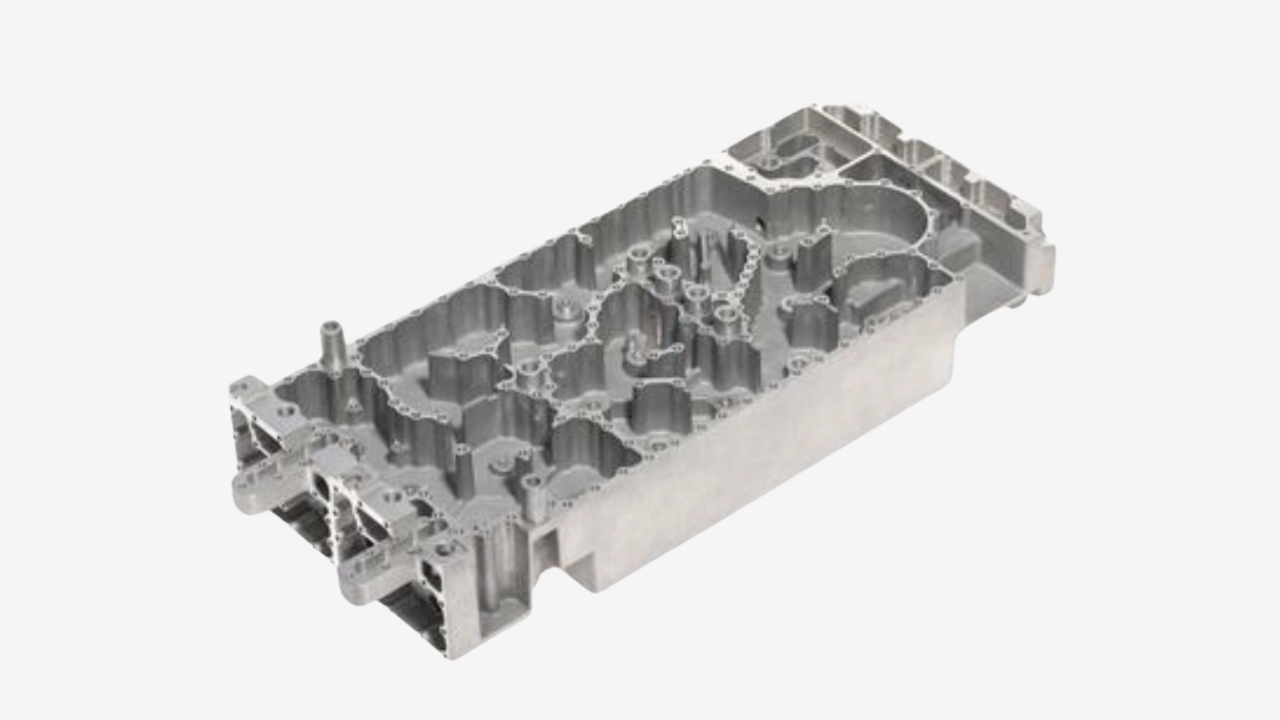
A413 has a silicon content of nearly 12%. That much silicon content means the melt flows exceptionally well. After solidification, the part’s internal structure is very dense. Tiny porosity—the usual headache in die-cast aluminum—is essentially a non-issue. Thermal dissipation is also among the best you’ll get from a die-cast aluminum alloy.
A413 belongs in high-pressure hydraulic pump housings, cylinder blocks, and sealing covers. Because these components need to contain liquids or high-pressure gases, they simply cannot leak.
A high silicon content makes aluminum alloys brittle and reduces their elongation. So A413 cannot withstand high loads and tends to stick to the cutting tools during machining. If your parts need heavy CNC machining after casting, A413 is the wrong call.
EN AC-46000
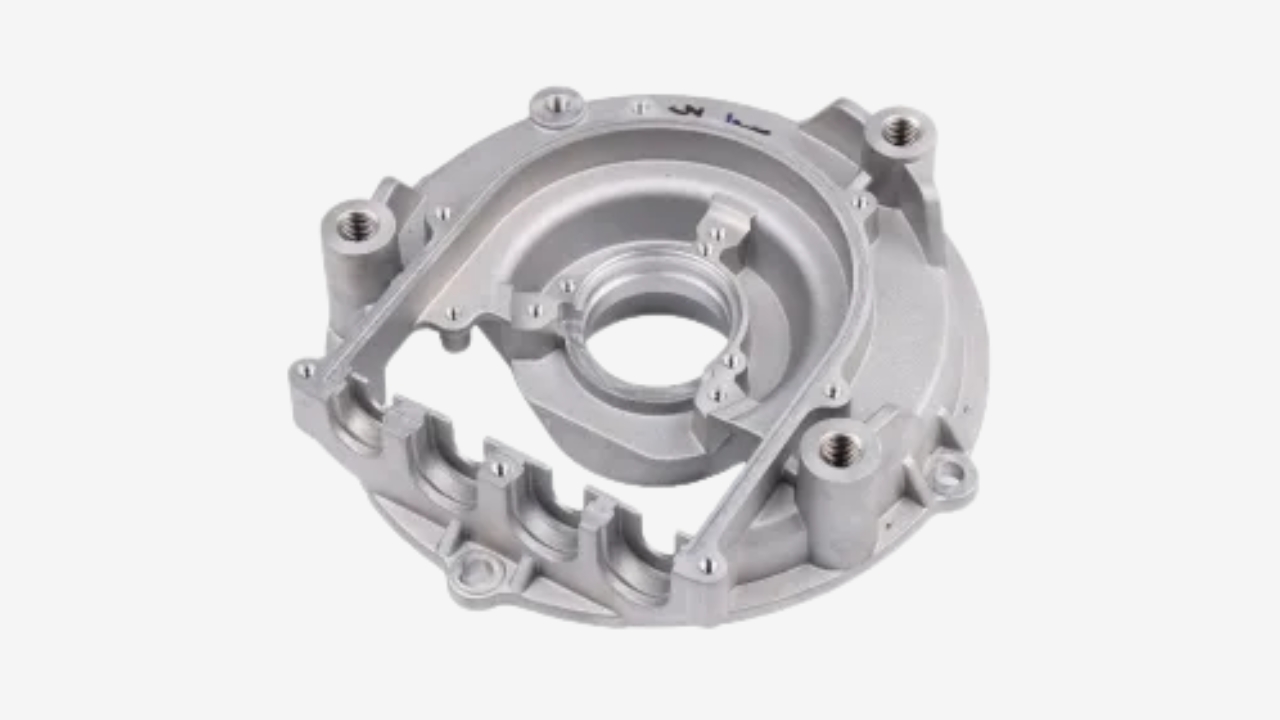
EN AC-46000 is also known as AlSi9Cu3. This grade is most likely what is specified on European part drawings.
Its chemical composition and mechanical strength are very similar to those of A380. In most applications, the two can be used interchangeably.
But Europe has stricter limits on impurities in aluminum alloys. When your aluminum die casting parts need to meet the EN 1706 standard, EN AC-46000 is the one to specify.
How to Match Aluminum Die Casting Material Grades to Your Application
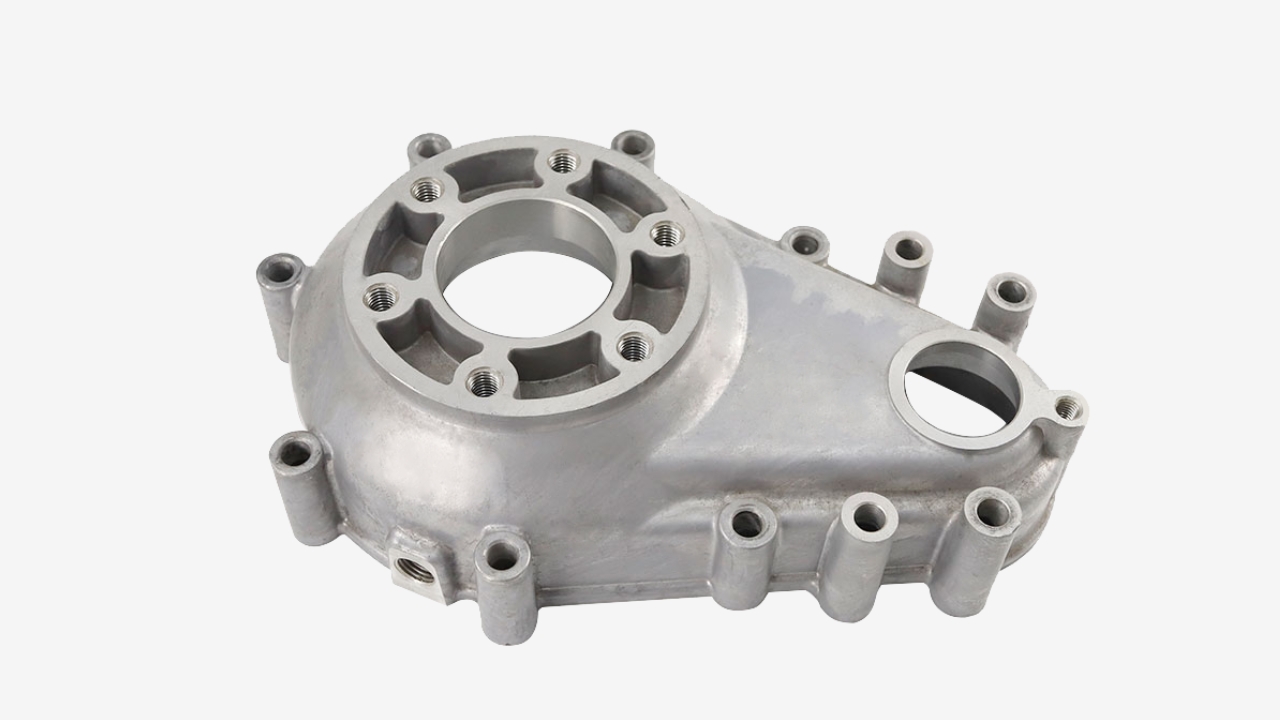
Choosing Grades Based on Industry and End Use
| Industry / Application | Recommended aluminum grade | Notes |
| Automotive brackets, oil pans, transmission housings | A380, ADC12, A383 | Best balance of structural strength and mass-production cost |
| Filter enclosures, 5G base station housings, heatsinks | ADC12, A383, A413 | High thermal conductivity, perfect fluidity for thin-walled geometry |
| Decorative boat hardware, underwater enclosures, marine components | A360 | Low copper content delivers premium resistance against saltwater corrosion |
| Hydraulic valve bodies, high-pressure pump housings | A413, A383 | Maximum silicon content eliminates porosity, air tightness |
| European export project | EN AC-46000 | Directly compliant with European standards, saving on compliance costs |
| Medical device housing | A360 | Ranked first in corrosion resistance |
| Consumer electronics enclosures | ADC12 | Good flow, can be thinned |
Factoring in Surface Finish and Heat Treatment Requirements
Not all anodized aluminum castings will produce attractive colors. A380, ADC12, and A413 all have high silicon content. When oxidized, they turn black or gray, and their surfaces are covered with color variations.
If you are planning to perform standard anodizing, you might consider using A360. It has sufficient corrosion resistance, and the anodizing results are decent.
If the look really matters—for example, the consumer electronics casing needs a uniform glossy finish—then go with the ADC6. It is a copper-free aluminum-magnesium alloy. It is the cleanest when anodized, but it is expensive and has slightly poorer castability.
High-pressure die-cast parts naturally have tiny pores. Once they enter the heat treatment furnace, these pores will expand due to heat, and the part surfaces will blister and bulge. The whole batch will go in the bin. If you insist on performing T6 heat treatment, the standard die-casting grades won’t work. You’ll have to look for specialized grades or switch to A356 for low-pressure die casting.
Powder coating and electrophoretic coating are compatible with all substrate grades. Both A380 and ADC12 can be used. But be sure that the die casting surface does not have any large shrinkage cavities or cold shuts, otherwise the coating will not cover them properly after spraying.
FAQ
Is ADC12 Suitable for Marine or Saltwater Environments?
Not applicable. ADC12 contains up to 1.5%-3.5% copper. When in contact with saltwater, copper will cause electrochemical corrosion, and white spots and pitting on the parts’ surface will show up fast.
Go with A360 for marine equipment and coastal outdoor components, which have a high magnesium content and extremely low copper content.
If your part has been designed as ADC12, the only way to effectively block saltwater is to apply additional thick powder coating or Teflon coating. However, those threaded holes, sharp edges, and weld seams are still weak spots where saltwater gets in.
The material savings won’t cover the repair bills, customer complaints, and production downtime losses that follow.
Which Die Casting Aluminum Grade Has the Highest Thermal Conductivity?
A413 ranks among the top, with a thermal conductivity of around 121 W/m·K. Its copper content is extremely low, and the silicon content is nearly 12%. The high silicon content makes the structure denser and lets heat dissipate quickly.
High thermal conductivity die casting aluminum often sacrifices the part’s hardness. If your 5G base station or high-power LED heat sink components need serious thermal performance, go with A413. For conventional thin-walled heat sinks, ADC12 is sufficient, whose thermal conductivity is about 96 W/m·K.
What Is the Best Aluminum Die Casting Grade for Food-Contact or FDA-Compliant Parts?
The FDA has strict restrictions on aluminum materials in food contact applications. Die-cast aluminum alloys usually cannot come into direct contact with food; they need a hard anodized coating or a food-grade coating between the metal and the food.
A380 and ADC12 both contain high copper content—heavy metal migration is a real concern. They will not be approved by the FDA. You can choose A360 as the base material. It has the lowest levels of copper and heavy metal impurities.
If you must use die-cast parts that come into contact with food, check out the ADC6 first. It is an aluminum-magnesium alloy without copper. It offers good corrosion resistance. Of all the die-cast aluminum options, ADC6 gets you closest to food-grade.
Which Aluminum Die Casting Grade Offers the Best Machinability After Casting?
The machinability of both A380 and ADC12 is good, but overall, A383 is easier to work with. The ratio of silicon to copper in A383 has been adjusted. When cutting, it has less resistance, chip breaking is clean, and the machined surface comes out smooth. Tool sticking is rarely an issue.
If your parts require extensive subsequent operations such as fine milling, drilling, or tapping, A383 cuts down on tool wear and saves machining time. Stay away from high-silicon grades like A413 or ADC12 for anything that needs heavy machining. They will cause cutting tools to wear out very quickly during subsequent CNC machining.
How Do Impurity Limits in European Grades like EN AC-46000 Impact RoHS and REACH Compliance for Exports?
EN AC-46000 follows European standards. Its limits for heavy metal impurities such as lead, cadmium, and mercury are one level stricter than those of ordinary A380. That tighter baseline puts it in better shape for RoHS and REACH out of the gate. But grade compliance only ensures that the base material passes the test. The surface treatment also requires separate RoHS and REACH tests.
If the parts are manufactured using A380, the lead content in a particular batch exceeds the RoHS 0.4% aluminum lead exemption threshold. At EU customs, that batch will get held or sent back.
In the EU, you can specify your materials directly to EN standards and request suppliers to provide dual RoHS/REACH reports for both the base material and the surface treatment; don’t rely solely on the material grade.
Final Thoughts
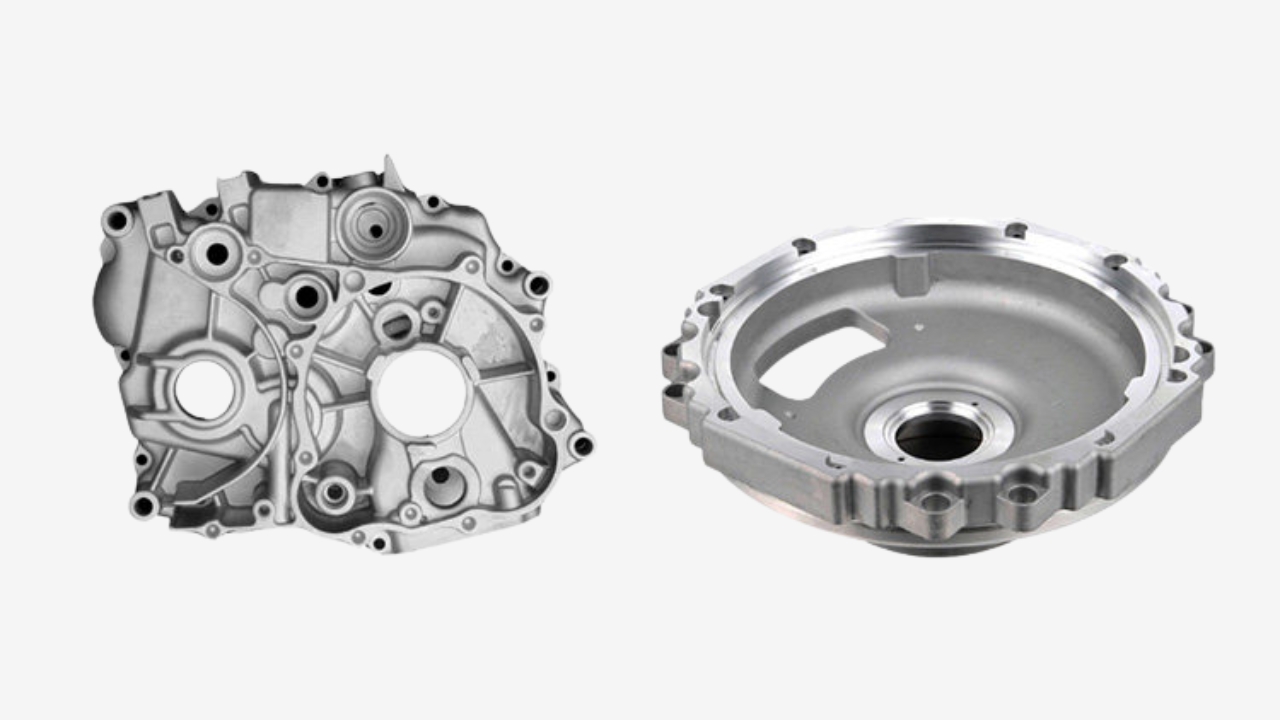
We are a custom aluminum die-casting supplier. We stock and cast A380, ADC12, A383, A360, A413, and EN AC-46000 regularly. Get the grade right at the start, and you won’t be fixing it later—send us your drawings, and we’ll sort it out.